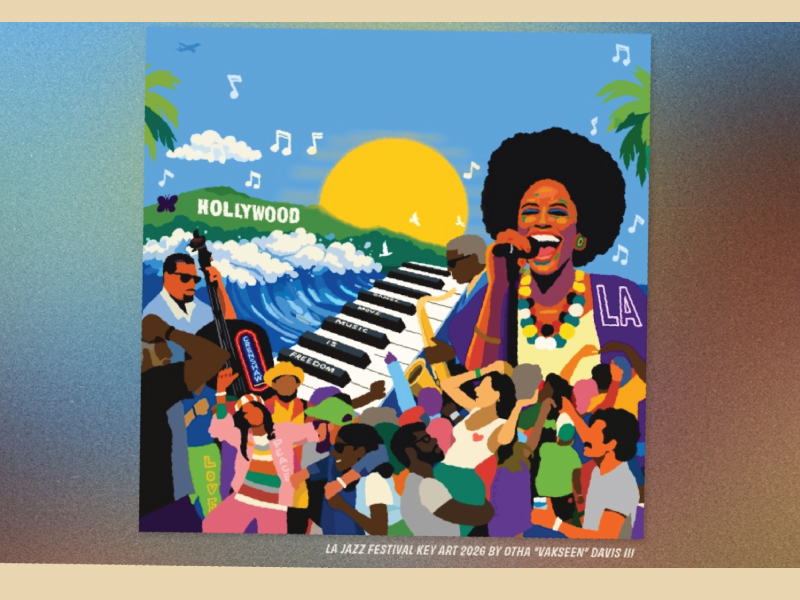
Los Angeles has always had rhythm. You hear it in traffic rolling down Crenshaw, in late-night sets tucked inside neighborhood bars, in park gatherings that turn into block parties, and in the city’s long, often overlooked history of Black music.
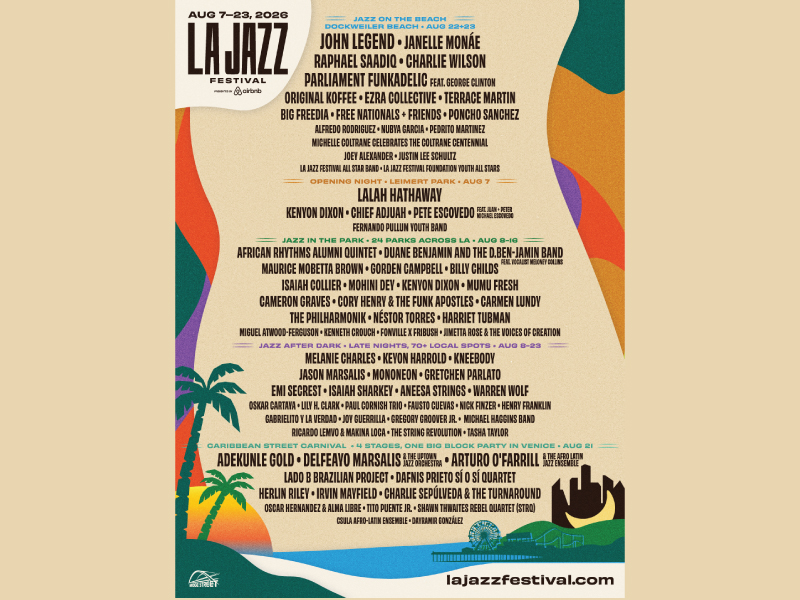
The inaugural LA Jazz Festival will take over Los Angeles in August 2026 with 17 days of music, culture and community across the region. Expected to draw 250,000 people, the festival will feature several free concerts, free concerts, bringing together legendary artists, fresh new voices and neighborhoods that helped shape the city’s sound.
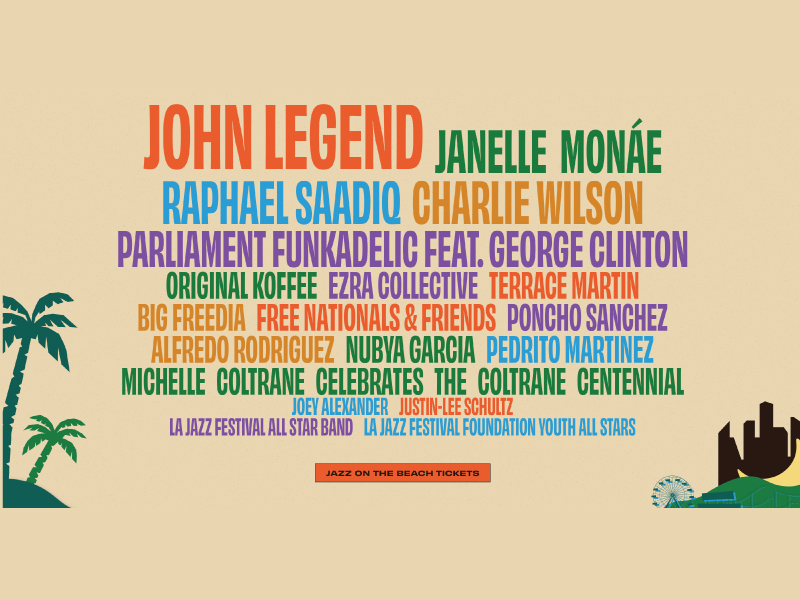
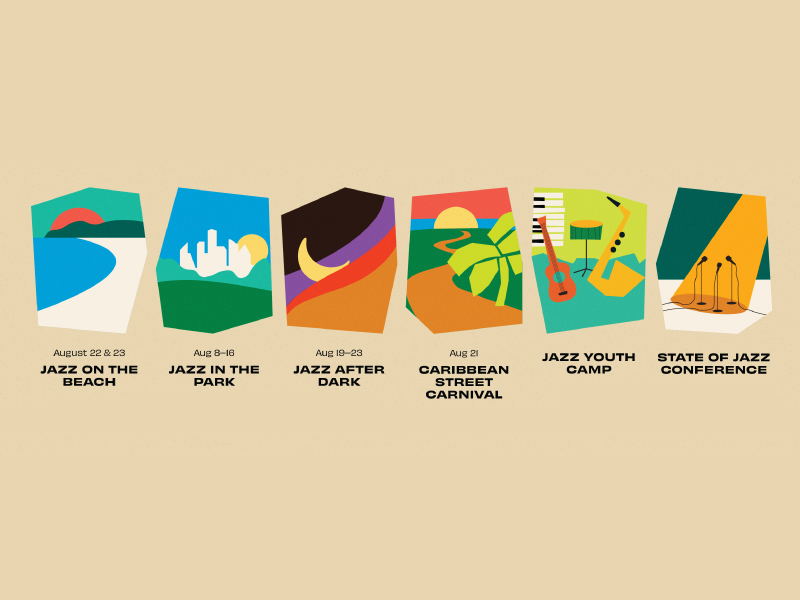
The festival’s programming is built for discovery. Jazz in the Park will bring free live music to public parks across the region, creating the kind of open-air gathering where families, longtime jazz fans and curious first-timers can all find a place on the lawn. Jazz After Dark will move the energy into local neighborhood spots, with late-night events designed for the crowd that knows the best parts of LA often happen after the sun goes down.
Then there is the Caribbean Street Carnival, a celebration of the rhythms that helped shape early jazz in New Orleans. It is a reminder that jazz has never belonged to one room, one city or one generation. It moves. It absorbs. It carries history in its bones and still knows how to make people dance.
That history runs deep in Los Angeles.
Jazz arrived in the city in the early 1900s, traveling west from New Orleans through the Union Pacific rail line into Watts. Creole musicians came to LA seeking opportunity, work and refuge from Jim Crow, drawn by the entertainment industry, vaudeville circuits and the promise of a different kind of future. From there, jazz found a home in the supper clubs of Central Avenue, worked its way into Hollywood scores and helped raise artists who changed American music.
The LA Jazz Festival is rooted in that legacy, but it is not trapped in the past. Founder Martin Ludlow, a music promoter, labor activist and former LA City Council member, has spent more than a decade building the relationships needed to make the festival happen. His vision connects musicians, community organizations, city and county leaders, coastal advocates and the neighborhoods that will host the celebration.
The result is a festival with a bigger purpose than a weekend lineup.
Through the LA Jazz Festival Foundation Youth Camp, more than 2,000 high school students from across the region will spend a day at the beach, many for the first time. The program will include workshops on coastal protection, jazz history, masterclasses with musical icons and conversations about mental health.
The festival will also offer Coastal Cultural Tours, which explore sites tied to coastal racial displacement, places where Black and Brown communities built lives, businesses and gathering spaces before being pushed out through force, fire and eminent domain. The tours are designed to be honest, difficult and necessary, ending with music, food and community.
In a city that can sometimes feel scattered by freeways and schedules, LA Jazz Festival offers a different map: one drawn by sound, community and the belief that culture is best experienced together. Come for the music. Stay for the neighborhoods. Bring the family to a park concert. Follow the sound into a late-night room. Learn the history beneath the streets. Eat locally, dance freely and see Los Angeles through the people and places that make it move.
For more information about the festival, visit lajazzfestival.com
Photo credits: Photo courtesy of LA Jazz Festival