Written by SHERRY STEIN. Featured in Performances Magazine, A Noise Within, February 2026 Issue
Now 270 years after he was born, the composer is in abundance with Amadeus, The Magic Flute, his Requiem and an array of symphonic and chamber concerts on the calendar. THE WORD “GENIUS” gets thrown around fairly freely these days—so freely that it gets on Darko Tresnjak’s nerves. He feels we should preserve the word for those with truly exceptional creative or intellectual power. When Tresnjak experiences Mozart, the director recognizes talent on another level entirely.
“I got lightheaded at one point looking at a Mozart score,” says Tresnjak, the Tony-winning director of A Gentleman’s Guide to Love and Murder. “I had that same experience with a Shakespeare play. When I read Shakespeare plays and look at Mozart’s scores, I understand what genius is. “The music is so glorious, yet unlike Verdi operas, his are not colossal epic stories. There is such humanity in Mozart’s work.”
“This isn’t just business for me— it’s my life, my passion, part of my DNA,” Soleimani says, adding that his love of art and the craft are what keep him engaged. “My heritage and family history in the rug industry instilled a deep love for the artistry and craftsmanship of antique rugs.”
He arrived in L.A. in 1988. Noting, however, that his expertise extends beyond antiques, he adds, “That foundation informs my contemporary designs through a focus on nuanced texture and subtle color.”
Soleimani’s West Hollywood showroom is an impressive structure on a stretch of Melrose Avenue rich in the fine textile trade. Its 20,000-plus square feet of space encompasses a seemingly endless collection of rugs—rolled upright, hanging from walls like massive canvases or integrated into living-space vignettes alongside other Soleimani products.
“The design of our showroom was inspired by a less-is-more approach,” says Soleimani. “There’s a calm refined vibe that really lets the products shine. We focused on clean lines, then layered in beautiful, textured stone to bring depth without overcomplicating things.”
That deep appreciation for Wolfgang Amadeus Mozart, and a full resume of musicals, plays and operas, make Tresnjak a fitting director for Amadeus. Peter Shaffer’s witty and lauded 1979 play explores an imagined rivalry between brilliant young Wolfgang and respected composer Antonio Salieri. Tresnjak directs a new production for Pasadena Playhouse Feb. 11-Mar. 8
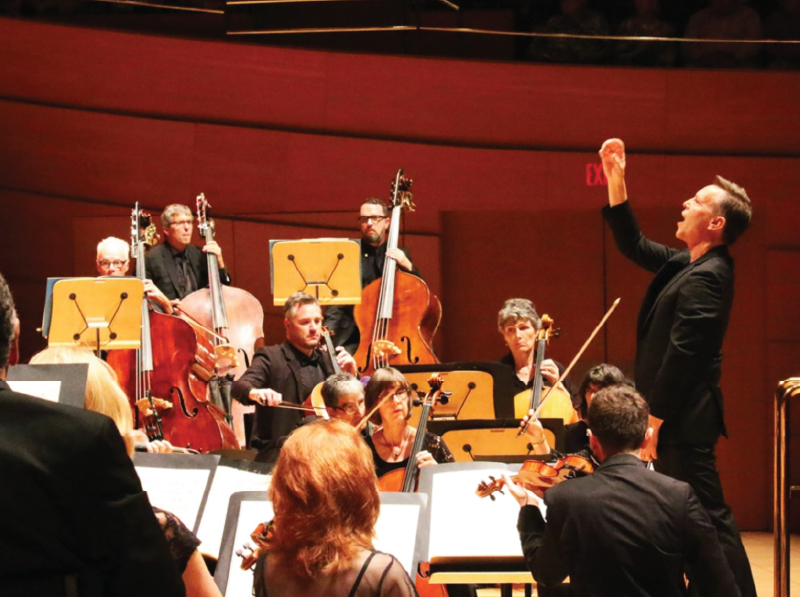
Born 270 years ago on Jan. 27, Mozart died unexpectedly at just 35, cause only speculated. Though never financially successful in his lifetime, his music has never gone away. He’s front and center over the next few months, not only with Amadeus. The Southern California concert calendar is packed with operatic, vocal, symphonic and chamber performances, including two of his final and most consequential works: The Los Angeles Master Chorale performs Mozart’s Requiem in April and L.A. Opera brings back The Magic Flute in May and June.
According to Master Chorale artistic director Grant Gershon, what distinguishes Mozart is a synthesis of many aspects of his craft. “To me, it’s the combination of head and heart,” he says. “The music is so perfectly crafted and so sophisticated and so satisfying to study just from a musicological standpoint. Then there’s the empathy, the heart, the understanding.”
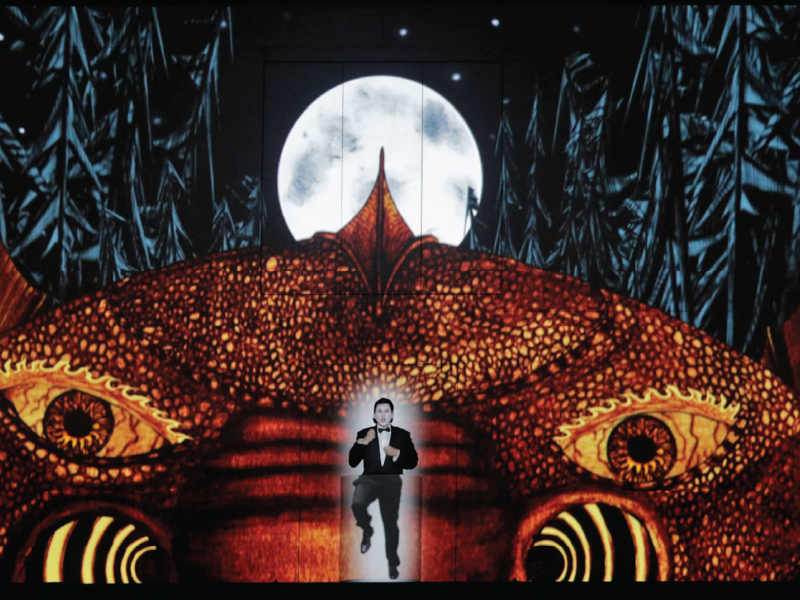
James Conlon selected the enchanting Barrie Kosky-directed production of The Magic Flute for his final opera after 20 years as music director of LA Opera. Mozart is clearly a company favorite: It performed The Marriage of Figaro in 2023 and Così fan tutte in 2025. Kosky’s clever, cinematic interpretation of The Magic Flute has been performed all over the world since its U.S. premiere here in 2013. But looking beyond the staging, Conlon says simply, “The music is the music is the music.”
At one point in Amadeus, which Shaffer adapted in 1984 into an Oscar-winning Miloš Forman film, Salieri reflects on a Mozart score: “This was no composition by a performing monkey! This was a music I’d never heard. Filled with such longing, such unfulfillable longing, it had me trembling. It seemed to me that I was hearing the voice of God.”
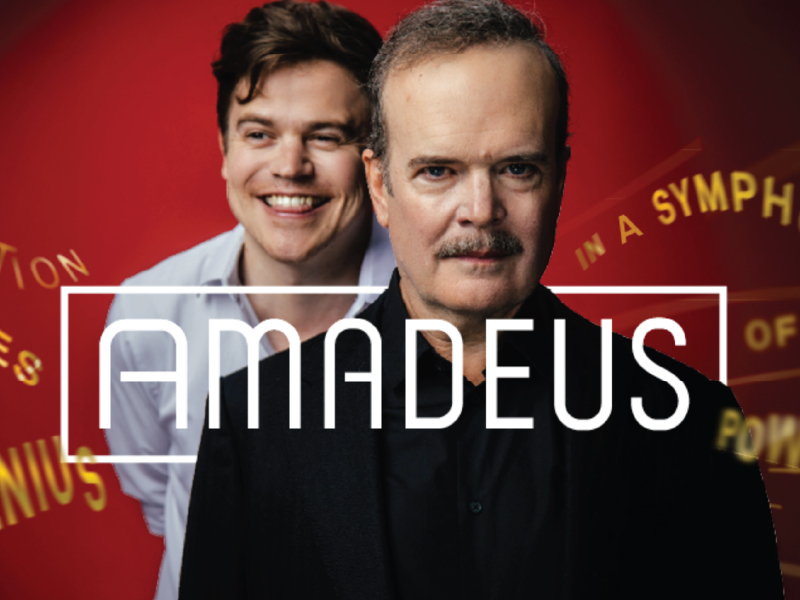
In the play, a dying Salieri looks back on his tangled relationship with Mozart; the story weaves themes of genius, creativity, God, ambition, jealousy and sacrifice. The two antagonists are meaty roles, catnip for actors at the top of their game. (Multiple men have won or been nominated for the Tony, Oscar and Olivier Awards for the roles.) Pasadena’s cast features Jefferson Mays and Sam Clemmett. Mays, a Tony winner (I Am My Own Wife) and nominee (A Gentleman’s Guide) plays Salieri. Clemmett, known for theater (Harry Potter and the Cursed Child on Broadway and the West End) and on screen (Queen Charlotte: A Bridgerton Story), portrays Mozart.
The marathon role of Salieri has long enticed Mays. He was in discussions for an Amadeus with another director that was upended by the pandemic. “I find it really challenging and difficult and rather scary. I suppose that’s good sign to do something,” he says. “I don’t think I’ve ever been so cowed by a role before in my life.”
That might seem surprising to hear from an actor who played eight members of the D’Ysquith family in A Gentlemen’s Guide and inhabited 50 roles in a solo A Christmas Carol that originated at the Geffen Playhouse and moved to Broadway. “When you’re doing multi-character plays,” Mays says, “you’re like a caricaturist working at great speed trying to land characters as deftly and economically as you can on the fly, leaping from one to the other. That’s as athletic as it is artistic.
“Here, I am inhabiting this extraordinary character and must inhabit him for two and a half hours. There’s something humbling and sobering and frightening about that, being one person undergoing all these things and having this transformation take place. It’s a much more profound, deeper experience.” Mays is delighted to work again with Tresnjak. Their friendship and professional partnership goes back decades. Tresnjak directed Mays in a 1999 production of Rosencrantz and Guildenstern are Dead that the director says launched his career.
Salieri was a pivotal composer of his time. But Mozart’s legacy is why we care and it will be on display in Pasadena’s take on Amadeus more than in other productions. That’s because Tresnjak brings the perspective of an opera director. Rather than relying on pre-recorded music and lip syncing, Tresnjak will have opera singers and a harpsichordist perform selections from Mozart’s The Marriage of Figaro, The Magic Flute and Don Giovanni.
He enlisted soprano and diction coach Jennifer Ringo (who is married MARTHA BENEDICT FEATURE to James Conlon) to work with the singers on text. “The thing I’m most looking forward to is being washed over and bathed and borne aloft by the astonishing Requiem and trios from Cosi fan tutte and Figaro,” Mays says.
Including live music is one of the many elements about the production that excite Danny Feldman, Pasadena Playhouse producing artistic director, who helped assemble the creative team. “It’s rare you see a play with singing in it that way. It feels much more like a musical in scope of the story we’re telling. It will dramatically amp up the experience of seeing the show,” he says. “What a way to honor and give tribute to Mozart and the genius of his music.”
For Gershon, Mozart, and especially his Requiem, hold a special place in his musical heart. Young Grant was as much a pianist as a singer when he went to music camp in Idyllwild at age 13. “Singing the Mozart Requiem with 120 other chorus geeks, rehearsing for two weeks and then performing it was the thing that changed my life,” he recalls. “It was specifically the music of Mozart. For the first time I felt that sense of euphoria you get when you’re immersed in something that’s so much bigger than anything you’d ever imagined before.”
Now, with an abundant choral career, Gershon can appreciate the meaning of Mozart’s composition, which was left unfinished. He sees in the work an empathy for the living, trying to be a comfort for the survivors combined with a sense of terror about facing death. “It’s such a visionary work,” he says. “I think it’s that sense of, even though he was only 35 years old, truly like he was standing with one foot on either side of the veil.
The piece stands out as the work of someone in their 30s who was not ready to go, he says. “That struggle in the music, and at the same time that sense of bliss and of understanding, to me is the crux of the Requiem. It’s why it’s just so mysterious and so overwhelmingly powerful and personal.”
Mozart finished The Magic Flute just months before he died. As his final opera, and with Kosky’s beloved production, The Magic Flute is a fitting coda to Conlon’s tenure as L.A. Opera’s music director. He chose it and Verdi’s final opera, Falstaff, for this last season before he becomes the company’s conductor laureate.
“These will be my last two productions. I wanted to include those two composers who have been my constant companions in my life,” Conlon says in a video interview for L.A. Opera about the season. Mozart, as well as Verdi and Wagner, will be featured in a gala concert on April 24 celebrating Conlon’s two decades with L.A. Opera.
The decision to conduct Mozart and Verdi in the end was, he says, “a very personal statement about my own preferences. Well, they’re not preferences because I love so many other things too. But they’re so fundamental.” Conlon has conducted Mozart operas at least 200 times for different companies.
The Magic Flute is the first opera he performed in, at age 15, when he was one third of a dragon. It’s also the first opera Conlon conducted at the Metropolitan Opera, in 1976, and he conducted Kenneth Branagh’s 2005 film adaptation. “It’s been with me all my life. There’s no number of performances that I can imagine doing that would be too many. I can go back to it over and over and over again.” As Mozart’s final opera, The Magic Flute has been called a last will and testament, Conlon said, although the composer didn’t know he would be dying in a few months.
Unlike Verdi, who lived a long and full compositional life, Mozart left a great body of work, yet only a slice of his genius.“We would’ve been grateful to have even two more years of Mozart’s music or five more years,” Conlon said. “His premature death at 35 years old is a tragedy for humanity.”
Read the rest of the issue: Performances Magazine | A Noise Within, February 2026
Photo credits: The Magic Flute at The LA Opera courtesy Cory Weaver. Amadeus courtesy of Pasadena Playhouse. Photo courtesy of Performances Magazine | A Noise Within, February 2026