

LOS ANGELES — With less than three years until the Olympic and Paralympic Games place Los Angeles under a global microscope, the Road to 2028 Leadership Summit made one thing clear: this city’s climate promises are moving from ambition to execution. Hosted by the Los Angeles Cleantech Incubator (LACI), the two-day convening closed this week with more than $125 million in new commitments aimed at delivering cleaner air, cleaner transportation, and long-term economic opportunity for Angelenos—by the time the world arrives in 2028.
The Summit gathered an unusually broad coalition—current and former Team USA athletes, policymakers, utility leaders, climate advocates, artists, and entrepreneurs—working at the intersection of clean energy, transportation, innovation, and policy. Figures like Russell Westbrook, Edward Norton, Bill Nye, Brian Cox and Nicole Ansari-Cox, and Aloe Blacc joined regional and national leaders not for symbolic alignment, but to accelerate tangible outcomes that residents will be able to see, feel, and experience.
Building on the foundational work of LACI’s Transportation Electrification Partnership (TEP) and Clean Energy Partnership (CEP), conversations focused on the next 2.5 pivotal years leading into the Games—and what must be delivered beyond them. The Summit also marked the official launch of LACI’s Road to 2028 campaign, the first in a series of convenings designed to turn mega-event urgency into a durable legacy for Greater Los Angeles.
“When the world arrives in Los Angeles in 2028, it will judge our climate progress by what people can actually see, feel, and experience,” said Matt Petersen, President and CEO of LACI. “The air they breathe, the buses and trains they ride, the streets they walk and bike on. Through this Summit, LACI inspired $125 million in new commitments that will accelerate clean energy, clean transportation, and clean air—uplifting Angelenos and serving as a model for the world.”
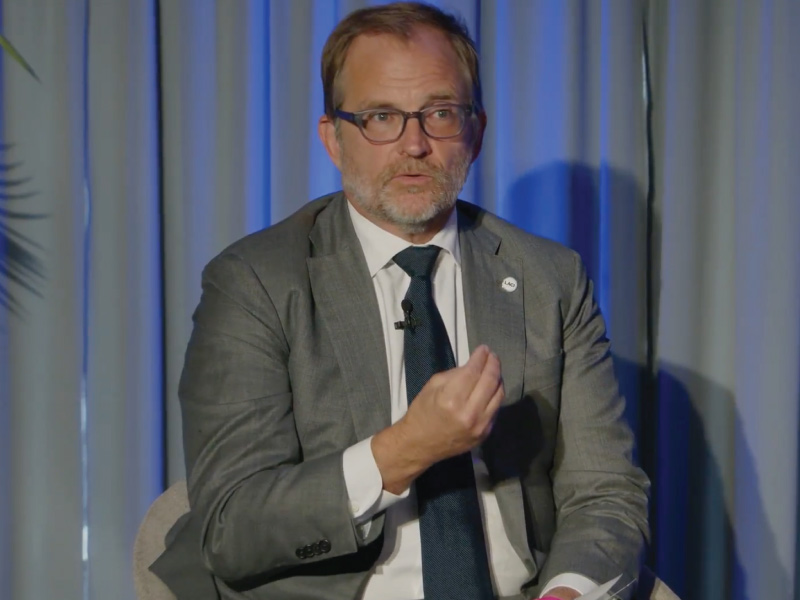
Athletes framed climate action as inseparable from community health and opportunity. Olympic gold medalist and NBA star Russell Westbrook underscored that the work extends far beyond the Games. “This isn’t just about medals,” he said. “It’s about creating jobs, investment, and a future where families and neighborhoods benefit long after the last ceremony.”
Throughout the Summit, speakers reinforced the scale of the challenge—and the opportunity. LADWP CEO Janisse Quiñones highlighted the pressure the Games will place on water and energy systems, while outlining milestones already underway, from expanding EV charging networks to achieving coal-free power. Senator Ben Allen emphasized the importance of long-term planning that prioritizes public transportation, youth sports, and equitable development across the region.
Industry and cultural voices added urgency and visibility. Edward Norton pointed to California’s ports as a proving ground for global standards in clean logistics. Bill Nye framed incremental transportation upgrades in Los Angeles as changes capable of rippling worldwide. Paralympic swimmer Jamal Hill and track athlete Sam Mattis spoke to the unifying power of sports—and its potential to accelerate public buy-in for sustainable systems.
The Summit’s most concrete outcome came in the form of commitments already in motion. Clean Power Alliance pledged $70 million toward community solar, municipal electrification, clean energy backup systems, and projects benefiting low-income households. Reframe Systems committed $5–10 million to bring a Southern California microfactory online to build low-carbon, affordable homes, expanding resilient housing efforts in fire-impacted communities like Altadena. LACI, the City of Los Angeles, and TEP partners announced the creation of a “Tiger Team” to fast-track catalytic EV charging infrastructure projects essential to the Games—an effort expected to unlock at least $50 million in additional public and private investment.
What emerged over two packed days was a shared understanding: the Olympics are not the finish line. They are the forcing mechanism. The Road to 2028 Leadership Summit positioned Los Angeles as a live test case for American climate innovation—one where clean air, green jobs, and equitable infrastructure are not abstract goals, but deliverables with a deadline.
For more information, visit laincubator.org
Hosted at: BMO Stadium, 3939 S Figueroa St, Los Angeles
Photo credits: Photos courtesy of LACI